A directly printed aligner.
Soleir describes a digitally designed, directly printed appliance with variable thickness and a shape-memory material called ActiveMemory™.
A provider’s guide • General dentistry
Considering clear aligners for your practice? Get to know Soleir—from the technology inside the aligner to the decisions behind your first case.
A practical exploration for dentists building an aligner service.
See Soleir in motion
Watch the product film featured on Soleir’s website, then explore the clinical workflow below.
Original Soleir product video. Open video separately ↗
The bird’s-eye view
A clear-aligner service brings together an appliance, a treatment plan, and an ongoing care process. Evaluate all three before choosing your system.
Soleir describes a digitally designed, directly printed appliance with variable thickness and a shape-memory material called ActiveMemory™.
Soleir offers orthodontist-led case design and states that submitted cases receive orthodontist review. You assess the proposed plan for your patient.
Your practice needs a process for diagnosis, informed consent, delivery, follow-up, and retention. Technology supports that process; clinical judgment guides it.
From interest to a first case
Explore the portal, review a sample plan, and understand how support works before committing to treatment.
Explore the workflow →The deep dive / 01
Three product concepts to explore in a hands-on demonstration.
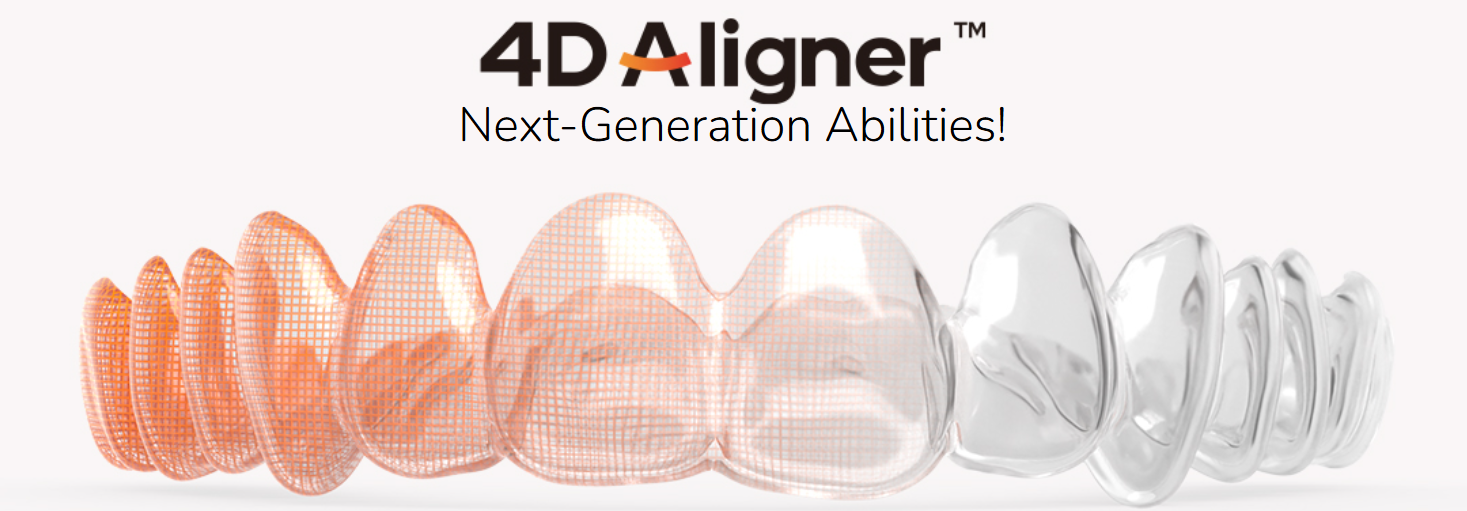
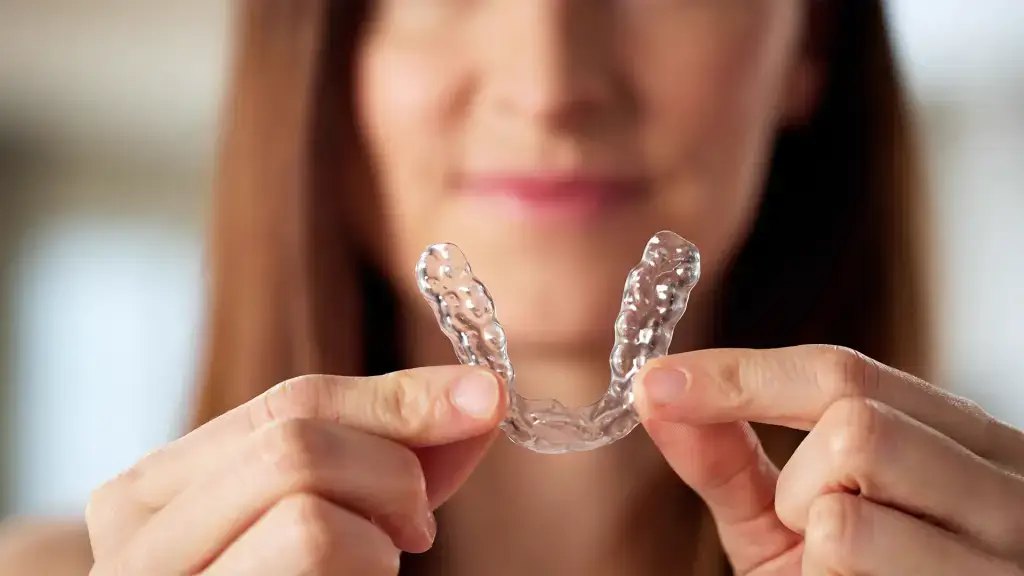
Soleir uses direct printing rather than forming a heated plastic sheet over a model. That manufacturing approach is the starting point for its customization story.
A real case’s prescription, digital plan, and finished appliance together. How are design changes reviewed and translated into production?
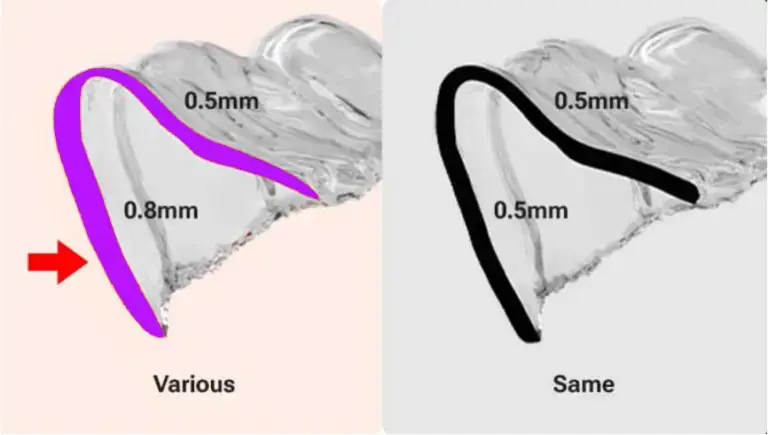
Soleir describes thickness variation within an aligner to tailor force application. Ask how those choices connect to the planned movements in a specific case.
Who specifies thickness, how the provider reviews it, and when attachments or other treatment mechanics remain necessary.
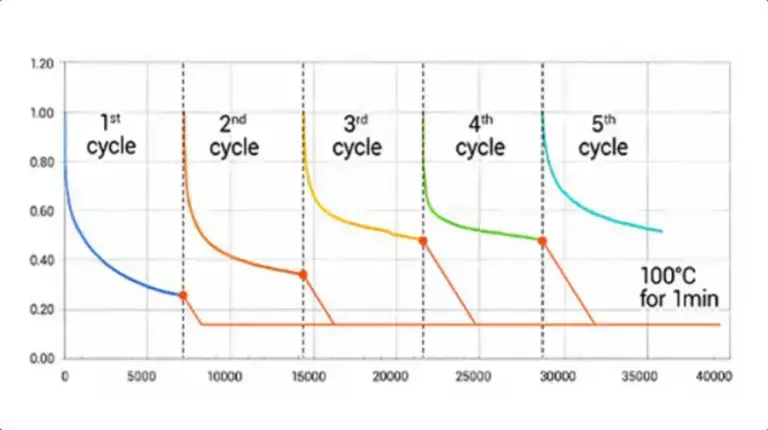
Soleir describes shape recovery using its prescribed heated cleaning process. Have the team demonstrate the current instructions and patient education materials.
The exact care protocol, compatible equipment, and how a patient should respond to a damaged or poorly fitting tray.
Product visuals: Soleir’s website and introduction document. The 4D Aligner rendering is from “Introducing Soleir.docx.” Ask for clinical evidence relevant to your intended case types; outcomes and appliance requirements depend on the patient and treatment plan.
The deep dive / 02
Soleir’s provider pathway includes registration, case submission, records upload, and plan approval. Here’s how to evaluate it from your chair.
Register as a provider. Confirm onboarding, team training, scanner compatibility, and support contacts.
Provide the patient records, prescription, and treatment objectives. Ask what makes a submission complete.
Review the proposed movements, discuss changes, and secure patient acceptance before approving production.
Verify fit, teach use and care, track progress, and establish a retention plan.
The deep dive / 03
A useful first question is: “Which cases am I equipped to diagnose, manage, and finish?”
Define a case-selection framework with appropriate clinical education and support. Discuss diagnostic requirements, complexity, and the point at which you would refer or collaborate with an orthodontist. Ask Soleir to walk through both a suitable introductory case and a case they would advise you to refer.
Before approval, understand the treatment objectives, planned movements, limitations, and care requirements. Clarify the scope of the reviewing orthodontist’s role and how clinical questions are resolved. Establish who is responsible for each decision and communication.
Soleir describes support for midcourse refinements and digital monitoring. Request a complete example: what flags a problem, who sees it, how your practice is notified, and how a revised plan is approved. Confirm response times and any associated charges.
No blanket promise belongs in the patient conversation. Soleir’s detailed product page acknowledges that some patients require attachments. Ask for case-specific planning criteria and examples relevant to the patients you expect to treat.
Practice opportunity explorer
Explore adding Soleir to a practice that does not currently offer aligners. See the economics of a new service—and how different follow-up plans could affect available chair time.
01 / Add a service
All results cover the full course of care for this group of cases. They are not monthly or annual cash-flow projections.
Drag the handle to explore 1–100 cases, use the − / + buttons, or enter a case count below.
All calculator amounts and results are in USD. Example fees and costs are editable. Include applicable monitoring, scans, retainers, team/doctor labor, supplies, shipping, insurance, and additional visits in your direct-cost estimate. The base price alone may not include these.
*Illustrative base prices use the 2025 introduction documents. All pricing is subject to change; confirm current pricing with Pacific Gloves before making a decision. Revision coverage varies by program incentives and prepaid insurance options. Confirm terms with Soleir/Pacific Gloves.
This compares two hypothetical schedules for the same new aligner service—not two products or measured treatment results. Do not subtract existing dental visits that would still occur.
Off-chair work is shown separately; it does not create chair capacity. Include its labor cost above. Clinical visit needs vary by patient.
“Explore 2 fewer reviews” changes an assumption only. It is not a Soleir performance claim.
Freed minutes become an opportunity only when staffing, appointment blocks, and patient demand allow them to be booked.
Describe one repeatable mix of procedures. The model fits complete mixes into the available hours; leftover minutes are not counted as revenue.
An example cost assumption. Adjust for supplies, lab fees, variable labor, and other direct costs of the replacement care.
Your full-course cohort
Collected fees less base case prices and your other direct costs. Before fixed overhead and opportunity cost.
Same initial/completion time; editable in-office reviews.
Read these separately. New-service contribution is compared with offering no aligner service. Replacement-care collections are compared with the reference follow-up plan. They are not added together here.
No assumed savings from Soleir technology, no treatment-outcome predictions, and no double-counting of revenue. Training, setup costs, fixed overhead, financing, and displaced existing work must be assessed separately.
Aligner care uses chair time even when follow-up is efficient. Review staffing, training, total treatment workload, patient demand, and whether these appointments would displace existing paid care. Off-chair monitoring also requires time and appropriate clinical oversight.
Discuss your practice scenario →Provider pricing · USD
Displayed prices are in USD and are subject to change. These illustrative case prices are used in the calculator above. New Zealand pricing options are available for discussion with Pacific Gloves.
| Case category | Single arch (USD)* | Dual arch (USD)* |
|---|---|---|
| Mild | $495 | $795 |
| Moderate | $895 | $1,195 |
| Moderate+ | $1,095 | $1,395 |
| Complex | $1,295 | $1,695 |
*Revision coverage varies by program incentives and prepaid insurance options. Confirm applicable terms with Soleir/Pacific Gloves.
Source: “Introducing Soleir.docx” and “Introducing Soleir- Dr. Jim Jones, DDS..docx,” last modified September 9 and August 26, 2025. Current prices, program eligibility, insurance terms, and package inclusions remain subject to confirmation with Soleir/Pacific Gloves.
For New Zealand partners
New Zealand pricing options are available for discussion. Displayed prices are in USD and are subject to change.
Discuss New Zealand pricing and package inclusions directly with Pacific Gloves.
All shipping, freight, delivery timing, and import charges will be quoted individually.
White-label opportunities are available. Partner terms, including branding, commitments, and fees, will be discussed individually.
Make the demonstration useful
Select the topics you want to cover. Your checklist can stay available in this browser when local storage is enabled.
An option for your practice
White-label opportunities for Soleir clear aligners are available. Explore how the offering could support your practice’s own brand.
Partner terms will be discussed individually. Discuss branding, packaging, onboarding, minimum commitments, and any additional fees with Pacific Gloves. Confirm which elements can carry your brand and which manufacturer information must remain.
Explore white-labeling →See the system in action
Request a product demonstration. Explore the appliance, follow a sample case, and discuss the support your team needs to get started.
Contact Pacific Gloves to arrange your demonstration.
Prefer email? info@pacificgloves.com